Royal Design Assets: Egyptian Queen Backgrounds for Covers
When building a brand identity or launching a product, the visual foundation is just as critical as the typography you choose. As a designer or publisher, you know that a premium font sets the tone for your text, but the imagery behind it defines the atmosphere. This is where the concept of the "Egyptian Queen" aesthetic enters the conversation. It isn't just about literal pyramids or hieroglyphs; it is about a specific visual language of power, elegance, and timelessness. In the world of digital assets, finding resources that match the weight of a high-quality serif font or the flair of a script font can be challenging.
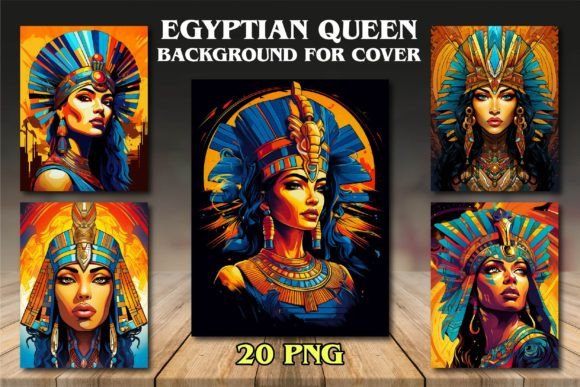
The collection of Egyptian Queen Backgrounds for Covers offers a distinct solution for creators who need more than just a flat color or a generic texture. These assets are designed to serve as the visual counterpart to sophisticated modern typography. Whether you are working on a KDP interior, a book cover, or social media graphics, understanding how to leverage these intricate designs is essential for creating a cohesive and professional final product. Let's explore how these backgrounds function as critical design assets and how they interact with your layout and font choices.
The Visual Personality of the Collection
The appeal of these backgrounds lies in their ability to blend complexity with structure. Ancient Egyptian art is famous for its symmetry and order, which makes it a surprisingly effective partner for modern design layouts. The collection features 20 distinct PNG files at 300 dpi, offering a level of detail that holds up well in print—crucial for packaging design or physical book covers where editorial design standards are high. The visual style leans heavily into rich, ornamental patterns, gold accents, and deep, saturated colors.
From a design perspective, these assets act as a "display" element. Just as a display font is used to grab attention, these backgrounds provide immediate visual impact. However, because they are intricate, they require a thoughtful approach to hierarchy. If you pair a busy background with a highly decorative handwritten font, the result can be chaotic. Instead, the strength of these Egyptian-themed assets is revealed when they are paired with clean, legible typefaces. Think of the background as the "voice" of the design—loud and commanding—while your chosen typography should be the clear "message" that sits on top of it.
Strategic Applications for Creators and Publishers
For the entrepreneur or content creator, versatility is key. These backgrounds aren't limited to historical fiction or niche coloring books. Their application spans various sectors of the creative economy. For instance, in logo design, a cropped section of an intricate pattern can serve as a unique texture or a symbolic element that suggests heritage and luxury. In web design, these high-resolution files can be scaled down to create subtle, repeating textures for headers or footers, adding depth to a site without overwhelming the user interface.
If you are involved in KDP (Kindle Direct Publishing), the value is immediate. The stress-relief and mindfulness market is competitive. A coloring book cover needs to signal "relaxation" instantly. These backgrounds provide that context. They allow you to create a brand identity that feels curated and premium. By using these assets, you can differentiate your product from those using standard, overused stock imagery. Furthermore, for social media graphics, these backgrounds offer a cohesive visual thread. You can use them to create story templates or post backgrounds that maintain a consistent aesthetic across your feed, which is vital for audience engagement.
Typography and Visual Hierarchy: Making the Fonts Work
The interaction between background imagery and typography is where the real design work happens. When using the Egyptian Queen Backgrounds for Covers, you are dealing with visual density. This requires a strong understanding of visual hierarchy. If you are designing a book cover, your title needs to pop. A bold sans serif font often works best here because the geometric simplicity of sans serif letters contrasts well with the organic, flowing lines of Egyptian motifs.
Alternatively, if the project calls for elegance—perhaps a wedding invitation or a high-end product label—a refined serif font can bridge the gap between the ancient imagery and modern sensibilities. The key is testing your font pairing. Do not just look at the letters on a white screen; overlay them on the actual background files. Check the readability against the busiest parts of the image. You may need to introduce a semi-transparent overlay or a drop shadow to ensure your text remains the focal point. This isn't just about aesthetics; it is about functionality. A beautiful cover is useless if the title is illegible at a thumbnail size.
Evaluating Fit and Commercial Use
Before integrating these assets into a commercial project, practical evaluation is necessary. First, consider the "personality" of your project. Does the regal, historical weight of an Egyptian theme align with your message? For a tech startup, probably not. For a wellness brand focusing on ancient remedies or a fantasy author, it is a perfect fit.
Second, treat these files as you would a commercial font. Check the licensing terms to ensure they cover your specific use case, whether it is for digital goods or print-on-demand merchandise. Finally, look at the technical specs. At 300 dpi, these are print-ready, but always test a small batch first. Print a proof of your cover or interior page to see how the colors translate from screen to paper. Digital screens emit light; paper absorbs it. The richness of these backgrounds might require slight adjustments to your text color to maintain contrast.
Ultimately, the Egyptian Queen Backgrounds for Covers collection is about providing a rich canvas for your creativity. By combining these high-quality design assets with thoughtful typography and strategic layout, you can produce professional, engaging work that stands out in a crowded marketplace. Whether for art therapy books, branding materials, or personal art projects, they offer a bridge between ancient artistic expression and modern creative needs.